






Understanding Your Medical Record Number and How to Locate It
 December 24, 2025

Having quick access to your medical record number (MRN) is essential for managing your health information efficiently. Whether you’re visiting a new healthcare provider, filing insurance claims, or accessing your medical history online, knowing how to find your MRN can save you time and prevent delays. This unique identifier plays a pivotal role in organizing, retrieving, and securing your health data across different healthcare systems. Learning where to find it and why it matters can empower you to take better control of your medical records and ensure your health information remains accurate and accessible whenever needed.
What Is a Medical Record Number?
A medical record number is a distinctive alphanumeric code assigned to you by a healthcare facility such as a hospital or clinic. Its primary purpose is to serve as a unique digital fingerprint within that organization’s system, allowing for the efficient identification and retrieval of your medical records. Unlike your Social Security number, which is a universal identifier, your MRN is specific to each healthcare provider you visit. This means that if you receive care from multiple providers, you may have different MRNs for each.
The significance of the MRN extends beyond mere identification. It helps organize and link all your health-related information—such as lab results, medication histories, imaging reports, and treatment plans—under a single, secure profile. This systematic approach minimizes errors, enhances the accuracy of your medical data, and facilitates seamless communication among healthcare providers. By ensuring that your records are correctly attributed, the MRN plays a crucial role in maintaining the integrity and confidentiality of your health information.
Where Can You Find Your Medical Record Number?
Locating your MRN might seem challenging at first, but it is usually straightforward once you know where to look. Healthcare organizations typically include your MRN on various official documents and digital portals. Common places to find your number include:
- Your hospital or clinic ID wristband, which is often assigned during your visit or admission.
- Discharge summaries, lab reports, or clinic visit summaries, which are provided after your appointment.
- Patient portals or online health management systems linked to your healthcare provider. These portals often display your MRN in your profile or account settings.
- Billing statements or insurance paperwork, where your MRN is used for processing claims.
- Physical ID cards issued by your healthcare provider, which may include your MRN printed on the card.
If you’re unsure of where to locate your MRN, contacting the medical records department of your healthcare provider can be very helpful. They can guide you through the process of retrieving your number securely and efficiently. Keeping your MRN handy is particularly useful when managing insurance claims, sharing records with specialists, or dealing with legal documentation related to your health.
Why Is the Medical Record Number Important?
Your MRN is more than just a label; it is the key to unlocking your comprehensive health history within a healthcare system. When you provide this number, healthcare professionals can instantly access your full medical records, which improves the quality and safety of your care. It reduces the risk of misidentification, especially in cases where patients share similar names or birthdates.
Having your MRN readily available simplifies many administrative and clinical processes. For example, when transitioning from your primary care physician to a specialist, sharing your MRN ensures that your provider has immediate access to your complete health data. This can lead to faster diagnoses, more personalized treatment, and fewer redundant tests.
Furthermore, your MRN is vital for legal and insurance purposes. It ensures that all your health-related claims, disability applications, and legal documentation are accurately linked to your identity. Without your MRN, processing these documents can be delayed, complicating your healthcare journey. Platforms like My Medical Records help store and manage your MRNs and related records securely, making them accessible when you need them most.
Can Medical Record Numbers Be Shared Across Providers?
A common misconception is that your MRN travels with you across different healthcare systems. However, in reality, each facility generates its own unique MRN for you. This means that if you visit multiple hospitals or clinics, you will likely have different MRNs assigned by each organization.
Despite this, many healthcare providers now participate in Health Information Exchanges (HIEs) or use integrated electronic health record (EHR) systems that facilitate data sharing across organizations. These systems allow your providers to communicate using other identifiers like your name, date of birth, and insurance details, ensuring continuity of care even when MRNs differ.
To stay organized, it’s advisable to keep a record of your various MRNs, especially if you frequently visit multiple providers. Some services, such as My Medical Records, can help you consolidate your health information from different sources, providing a unified view of your medical history regardless of the number of MRNs assigned across systems.
What If I Lost or Cannot Find My MRN?
If you find yourself unable to locate your MRN, don’t worry. Most healthcare facilities have procedures in place to help you retrieve it securely. Start by logging into your online patient portal, where your MRN is often displayed prominently in your profile or account dashboard.
Interesting:
- Mastering full time equivalent fte how to calculate and use it effectively
- Exploring the role of a patient care assistant and how to start your healthcare journey
- Understanding aptc health insurance how it saves you money and works
- Understanding hipaa compliance laws rules and how to protect patient data
If you don’t have access to the portal or cannot find the information there, contact the medical records department directly. Be prepared to verify your identity with personal details such as your full name, date of birth, and other identifying information. Once verified, they can provide your MRN over the phone or through secure messaging.
Storing your MRN digitally—such as in a secure health app or encrypted document—can prevent future difficulties. Platforms like My Medical Records facilitate safe storage of your health identifiers, making retrieval quick and effortless whenever needed.
Why Store Your MRN with My Medical Records?
In today’s digital health landscape, having instant access to your medical history, including your MRNs, is crucial. My Medical Records is an AI-powered platform designed to securely organize, store, and manage your healthcare documents and identifiers. By consolidating your MRNs, medical records, insurance documents, and legal files in one secure location, you can access everything you need in moments.
This centralized system helps streamline your interactions with healthcare providers, insurance companies, and legal entities. Whether you’re switching doctors, applying for disability benefits, or submitting legal medical records, having your MRNs and related documents organized reduces delays and errors. To learn more about how we can assist in safeguarding your health data, visit our platform.
Tips for Managing Your Medical Record Number
- Always request your MRN during check-in or at discharge.
- Store your MRN digitally in a secure, accessible location.
- Keep a record of all your MRNs from different providers.
- Share your MRN with trusted healthcare professionals when necessary.
Your medical record number is an essential element of your healthcare management. Properly stored and accessible, it ensures your health data remains accurate, secure, and readily available whenever your care team needs it.
Related Topics
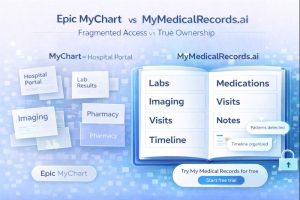
Comparing Patient Portals and Personal Health Record Platforms
While platforms like Epic MyChart provide access to records from specific hospital systems, comprehensive solutions like My Medical Records aggregate data across multiple providers, offering true ownership and control over your health information.
Correcting Inaccurate Records and Ensuring Data Integrity
Discover ways to identify and rectify errors in your medical files, ensuring your health information remains precise and trustworthy. Accurate data is vital for safe and effective treatment.
Managing Multiple Records for Family Caregivers
Learn how to consolidate records from various family members and providers to simplify caregiving responsibilities and maintain a clear, unified health history.
Balancing Privacy and Accessibility in Digital Health Records
Explore the importance of secure data sharing practices while maintaining patient privacy, especially as healthcare systems move toward interoperability.
Merging and Organizing Records from Multiple Providers
Utilize AI tools and best practices to prevent duplicates, reduce errors, and create a comprehensive health profile from multiple sources.
Maintaining your medical record numbers and associated data is a critical part of managing your healthcare effectively. With secure tools and proactive organization, you can ensure your health information is always accurate, accessible, and protected.