


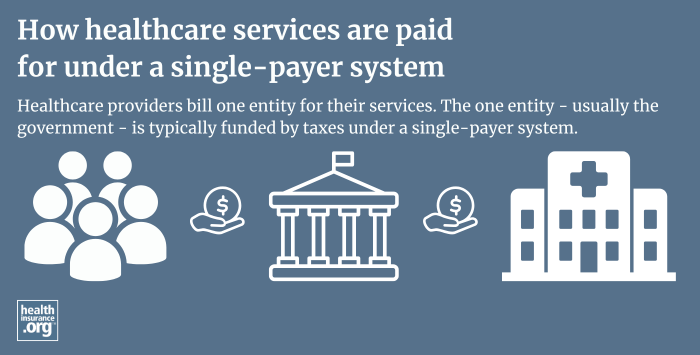
A single-payer healthcare system is a model where a single public authority manages and finances healthcare services for an entire population. In such systems, one entity—typically the government—collects all healthcare funding through taxes or other means and ensures that funds are allocated to pay healthcare providers. Countries with established single-payer models often cite the potential for increased efficiency and reduced administrative costs as key advantages. By consolidating billing and reimbursement processes into a single entity, the system can significantly cut down on paperwork and overhead, allowing more resources to be directed toward patient care.
In this setup, healthcare providers bill the government or the designated single payer for services rendered, rather than dealing with multiple insurance companies. This streamlining simplifies the administrative process for healthcare professionals and reduces the bureaucratic burden that often accompanies multi-payer systems. Citizens under a single-payer system typically enjoy access to comprehensive, high-quality healthcare services, with the added benefit of greater freedom to select providers compared to traditional insurance plans. The reduction in administrative hurdles and paperwork not only speeds up the billing process but also minimizes costs, making healthcare more affordable and accessible for all.
It is important to distinguish between a single-payer system and socialized medicine. While both models involve government involvement in healthcare, socialized medicine generally refers to a system where the government owns and operates healthcare facilities and employs healthcare professionals directly. In contrast, single-payer systems may still involve private providers delivering services, with only the financing being handled by the government. Countries like Canada exemplify a single-payer structure, whereas the UK’s National Health Service (NHS) operates under socialized medicine principles.
Related terms
- socialized medicine
Broader implications and innovations in healthcare
Emerging technologies and innovative approaches are increasingly integrated into single-payer frameworks, aiming to improve efficiency and patient outcomes. For example, virtual reality applications are revolutionizing medical training and patient care. Explore how immersive technologies are transforming healthcare delivery by visiting virtual reality in medicine perspectives and features.
Interesting:
Additionally, mental health treatment is benefiting from advances in immersive experiences. These approaches, often referred to as immersive therapy, are opening new avenues for mental health professionals. Discover more about these therapeutic innovations at immersive therapy a new frontier for mental health treatment.
Technological advancements are also impacting surgical training, where virtual reality is used to simulate complex procedures, helping future surgeons gain hands-on experience without risk. Learn about this cutting-edge practice at training the surgeons of tomorrow with virtual reality.
In the realm of sports, virtual reality is being employed to enhance athletic training and performance, blending physical and virtual environments for optimal results. Discover how this intersection is elevating athlete development by visiting elevating athletic performance the intersection of sports and virtual reality.