






Understanding the Single-Payer Healthcare System
 December 26, 2025
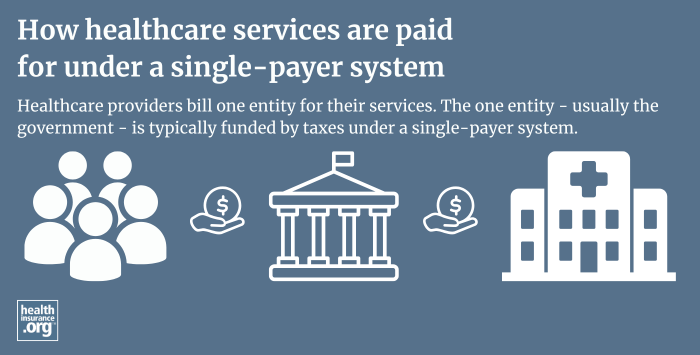
A single-payer healthcare system is a model where a single public or private entity is responsible for financing healthcare services for all citizens, often funded through taxes or other collective means. In countries with such systems, government agencies typically serve as the primary payers, managing the collection of healthcare funds and disbursing payments to providers. Advocates argue that this centralized approach can significantly reduce administrative overhead, eliminating the complex billing processes involving multiple insurance companies and private payers prevalent in other systems.
Under a single-payer framework, healthcare providers submit their bills to the designated entity, streamlining the administrative process. Patients benefit from access to comprehensive, high-quality medical services without the burden of copayments or complex insurance paperwork. Additionally, individuals generally retain the freedom to select their healthcare providers, offering a level of choice that exceeds many traditional insurance plans. The simplified billing and administrative procedures often translate into cost savings and increased efficiency within the healthcare sector.
It is important to distinguish a single-payer system from socialized medicine, despite some public misconceptions. While both models involve government involvement in healthcare, socialized medicine typically means the government owns and operates healthcare facilities and employs healthcare professionals directly—examples include the UK’s National Health Service. In contrast, single-payer systems usually involve private providers delivering services paid for by a government-funded insurance or payment source, such as Canada’s healthcare system or the United States’ Medicare program. For a broader understanding of healthcare payment models, exploring the concept of socialized medicine can be insightful.
Recent innovations and technological advancements are transforming healthcare delivery, including the integration of virtual reality technologies in medical training and patient treatment. For instance, immersive experiences are now being used to enhance medical education and surgical training. You can learn more about how these cutting-edge tools are shaping the future of medicine by reading about virtual reality in medicine perspectives and features. These developments not only improve the quality of care but also open new avenues for patient engagement and therapy.
Interesting:
Additionally, mental health treatment is experiencing a paradigm shift through immersive therapeutic approaches. Virtual environments are increasingly used to provide mental health interventions, offering tailored and engaging therapy sessions. This evolving field is discussed in detail in articles about immersive therapy as a new frontier for mental health. Such innovative methods aim to make mental health services more accessible and effective, especially for populations that may face barriers to traditional therapy.
Training the healthcare professionals of tomorrow is also benefiting from virtual reality tools. Medical schools and hospitals are adopting realistic simulation environments to prepare future surgeons and practitioners. This approach enhances skills acquisition and confidence before operating on actual patients, as described in resources about training the surgeons of tomorrow with virtual reality. These advancements are crucial in addressing the growing demand for highly skilled healthcare workers.
Moreover, the intersection of sports performance and virtual reality is creating new opportunities for athletes to enhance their skills and recovery processes. Virtual environments allow athletes to simulate game scenarios or practice techniques in controlled settings, leading to performance improvements. For further insights into this innovative field, explore how elevating athletic performance through the convergence of sports and virtual reality is revolutionizing sports training and rehabilitation.
The evolution of healthcare systems continues to be driven by technological progress, policy reforms, and innovative treatment modalities. Whether considering the structure of a single-payer system or exploring the latest in medical technology, understanding these developments is essential for informed healthcare decisions.