


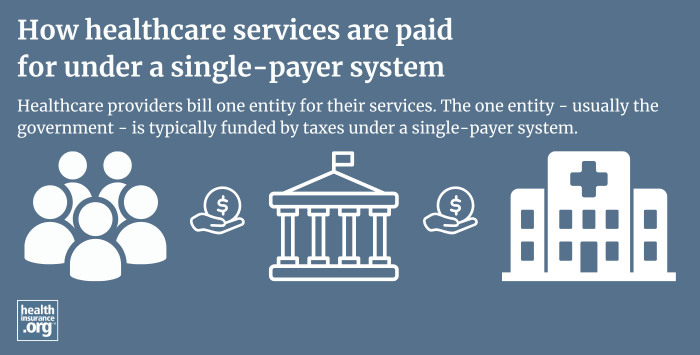
A single-payer healthcare system is a model in which a single public or private organization handles the financing of healthcare services for an entire population. Unlike multi-payer systems that involve numerous insurance companies, a single-payer system consolidates all healthcare funding into one entity, often the government. This structure aims to streamline administrative processes and reduce costs associated with billing and insurance management. Advocates believe that by simplifying the payment process—where healthcare providers bill only one entity—the system can eliminate a significant amount of administrative waste, leading to more efficient delivery of care.
In countries employing single-payer arrangements, such as Canada or the United Kingdom, the government typically functions as the primary payer for medical services. All citizens are entitled to receive comprehensive healthcare coverage, which includes essential medical services without direct charges at the point of care. Patients generally enjoy broader freedom to select healthcare providers than in many private insurance plans, and administrative paperwork is substantially minimized, making the experience smoother for both patients and providers.
It is important to distinguish a single-payer system from socialized medicine. While both models often involve government involvement in healthcare, socialized medicine refers specifically to a system where the government owns and operates healthcare facilities and employs healthcare professionals directly. In contrast, a single-payer system may still rely on private providers and hospitals, with the government merely acting as the primary funder. For a deeper understanding of how emerging technologies are shaping healthcare, exploring innovations like virtual reality in medicine can provide insightful perspectives on future medical practices, including patient treatment and medical training virtual reality in medicine perspectives and features.
How Single-Payer Systems Operate
In a typical single-payer setup, all healthcare providers submit bills to a unified agency or government body responsible for disbursing payments. This centralization simplifies the billing process, reduces administrative costs, and can help control overall healthcare expenditure. The system ensures that all citizens have access to necessary health services regardless of income or employment status, promoting health equity and reducing disparities.
Interesting:
Furthermore, some countries utilize innovative approaches like immersive therapy and other digital health tools to enhance patient care and mental health treatment. These advancements are transforming the landscape of healthcare, making treatments more accessible and personalized immersive therapy a new frontier for mental health treatment. Additionally, modern medical training increasingly incorporates virtual reality techniques, preparing future surgeons with realistic simulations that improve skills and patient safety training the surgeons of tomorrow with virtual reality.
Advantages and Disadvantages
Supporters of single-payer systems argue that they lead to lower overall healthcare costs, better health outcomes, and more equitable access to medical services. Reduced administrative overhead means resources can be diverted toward patient care and preventive services. However, critics contend that such systems may lead to longer wait times, decreased provider incentives, and increased government spending. The effectiveness of a single-payer model often depends on how well it is implemented and managed within the specific context of a country’s healthcare infrastructure.
Final Thoughts
A single-payer healthcare system offers a compelling alternative to traditional multi-payer models by emphasizing efficiency, equity, and comprehensive coverage. As healthcare continues to evolve with technological innovations, understanding these models helps inform policy decisions and healthcare strategies globally. Whether adopting new technologies or refining payment structures, the goal remains to deliver high-quality medical care to all citizens efficiently and sustainably.