






Understanding the Significance of the Initial Patient History in Medical Assessments
 December 24, 2025
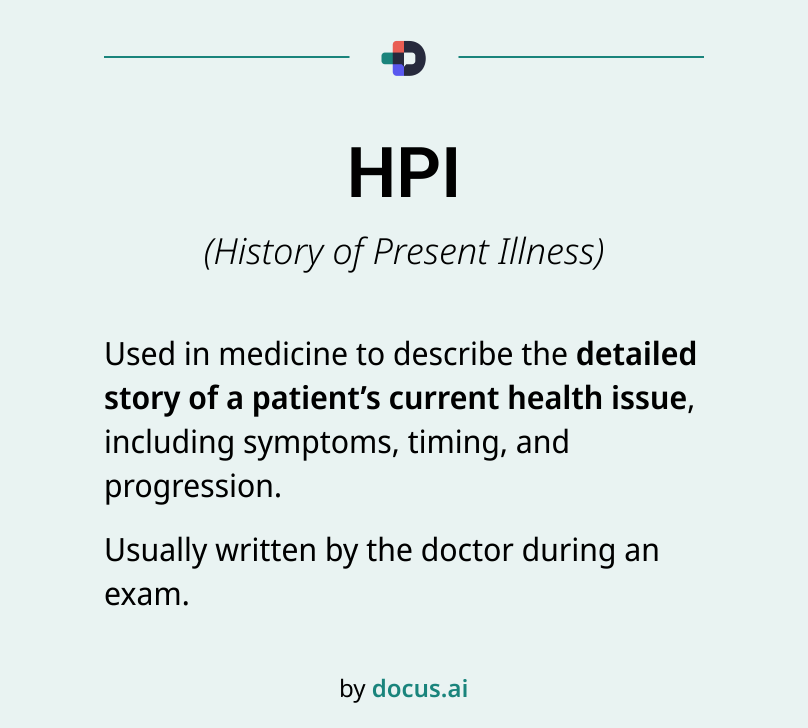
Every healthcare encounter begins with gathering essential information about a patient’s current health concerns. This foundational step, known as taking the history of present illness (HPI), is crucial for forming an accurate diagnosis and developing an effective treatment plan. By understanding what the patient reports about their symptoms, healthcare providers can gain valuable insights that influence their clinical reasoning and decision-making process.
When you visit a doctor and describe your symptoms, they start by collecting details about your current condition—this is the HPI. It is a vital component of medical documentation that narrates the story of your health issue, helping clinicians understand the onset, progression, and impact of your symptoms. The HPI guides further investigations, including physical examinations and diagnostic tests, and often helps determine the urgency and type of treatment needed.
Doctors typically record the HPI in a narrative format, emphasizing specific details such as the character of the pain, its location, duration, and any factors that worsen or relieve it. For example, a patient might report, “I have experienced chest pain for the past two days, which is sharp and localized on the left side, worsening with deep breaths, with no previous history of similar symptoms.” Such detailed descriptions enable clinicians to focus their assessment and consider possible diagnoses.
A well-constructed HPI is essential because it ensures clarity and precision, allowing the healthcare team to understand the patient’s experience without ambiguity. It acts as a bridge between the patient’s personal account and the clinical reasoning process. Evidence suggests that a comprehensive history-taking, especially the HPI, significantly enhances diagnostic accuracy, especially for complex or ambiguous cases.
The importance of the HPI cannot be overstated, as it often represents the first piece of information a provider reviews in a patient’s record. It helps to establish a timeline of events, identify potential causes, and prioritize diagnostic testing. The HPI also plays a role in differentiating serious conditions from benign issues, thereby guiding urgent interventions when necessary.
Interesting:
In the broader context of healthcare systems, understanding how patient history integrates into overall data management is vital. For example, in systems where electronic health records (EHRs) are used, the HPI forms a central part of medical documentation. These records often include abbreviations and shorthand, but the core narrative remains essential for continuity of care. To learn more about how healthcare data is organized and utilized, you can explore what is data management in healthcare.
While the HPI is primarily based on patient-reported information, it’s complemented by physical examinations and diagnostic tests. Sometimes, facilities still operate on older or legacy systems, which can affect how efficiently this information is collected and shared. To understand the implications of outdated technology, see what is a legacy system in healthcare.
In addition to detailed history-taking, understanding the structure of healthcare systems, such as those with single-payer models, can influence how services are delivered and documented. For further insight into different healthcare frameworks, visit the workings of single-payer healthcare.
Overall, the initial patient history, especially the HPI, remains a cornerstone of effective medical practice. It ensures that healthcare providers have a clear, patient-centered account of symptoms, enabling accurate diagnosis, appropriate treatment, and better health outcomes. Whether you’re a patient or a healthcare professional, appreciating the importance of this step underscores its role in delivering high-quality care.