


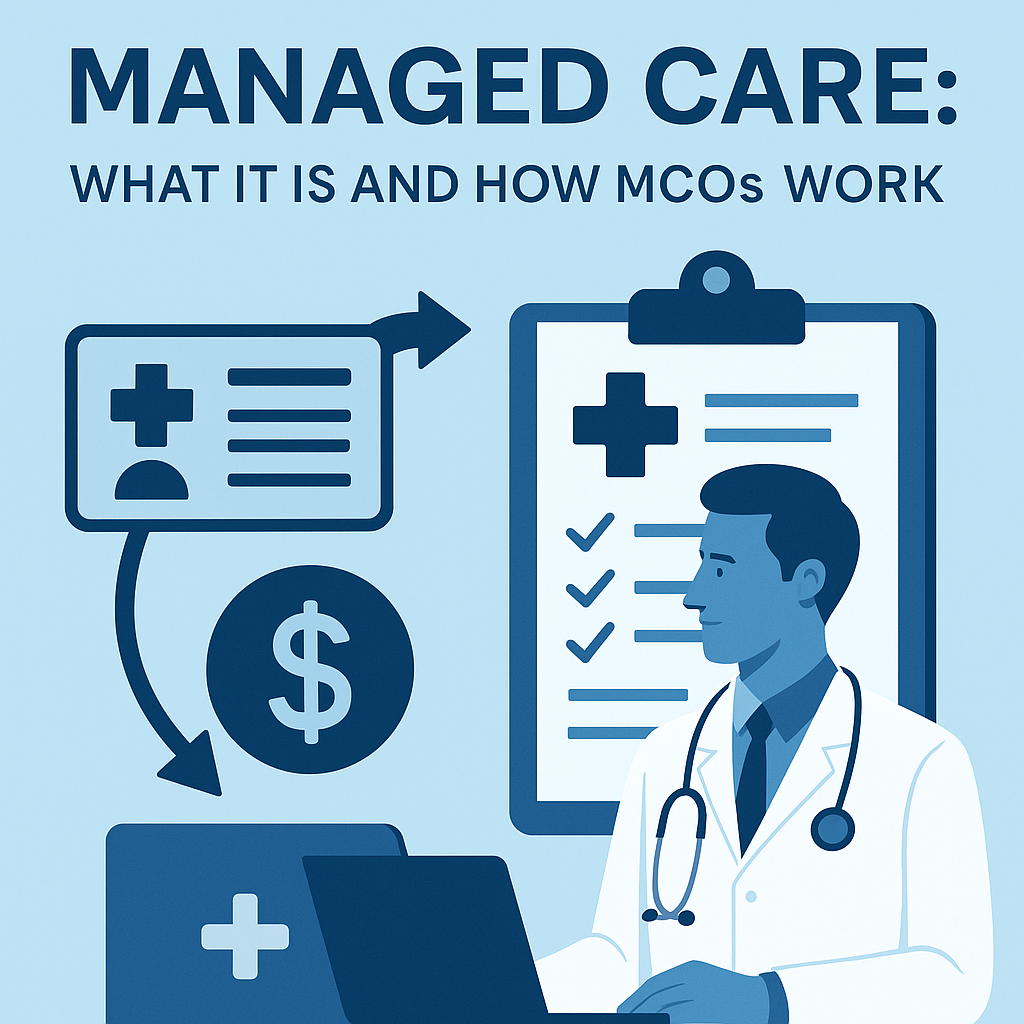
Healthcare systems are complex, constantly evolving, and often difficult to navigate. Managed care has emerged as a prominent model aimed at controlling costs while enhancing the quality of patient care. It functions through organized networks and strategic partnerships between payers and providers, emphasizing preventive services, efficiency, and accountability. As healthcare costs continue to rise, understanding the principles of managed care becomes essential for providers, administrators, and patients alike. This article explores what managed care entails, the roles of Managed Care Organizations (MCOs), and how these systems impact healthcare delivery.
What Is Managed Care?
Managed care is a comprehensive approach to healthcare delivery that balances cost control with quality improvement. It involves a coordinated system where a health care company, known as a Managed Care Organization (MCO), manages and arranges for medical services for its members. Unlike traditional fee-for-service models—which reimburse providers after each individual service—managed care emphasizes proactive health management, preventive care, and cost-effective treatment outcomes.
The roots of managed care trace back to the 1970s, a period marked by escalating healthcare expenses in the United States. This growth prompted both private insurers and government programs to seek alternative models that incentivize providers to prioritize value over volume. Techniques such as capitation, utilization reviews, and provider contracts became standard tools for fostering accountability and cost-efficiency.
For professionals navigating this system, understanding the intricacies of managed care is crucial. It involves mastering reimbursement structures, compliance standards, and network limitations—all of which directly influence operational workflows and patient outcomes.
Components of Managed Care
- Preventive and Population Health Focus: Emphasizes early intervention, screenings, and chronic disease management to prevent costly complications.
- Cost-Containment Strategies: Incorporates methods like utilization review and provider networks to minimize unnecessary treatments.
- Outcome-Based Incentives: Rewards providers for delivering high-quality, efficient care aligned with patient health outcomes.
What Are Managed Care Organizations (MCOs)?
Managed Care Organizations serve as the backbone of the managed care system. They enter into contractual agreements with government agencies or private insurers to deliver healthcare services to enrolled members. Acting as intermediaries, MCOs coordinate services among a network of healthcare providers, ensuring that members receive appropriate care while maintaining cost controls.
Each MCO develops tailored care plans with set benchmarks for quality and efficiency. Their primary goal is to streamline patient care by reducing unnecessary procedures, promoting preventive health measures, and managing chronic conditions effectively. This approach not only benefits insurers and state programs by controlling expenses but also enhances patient access to coordinated and comprehensive services.
Healthcare providers and administrative teams must understand how MCOs operate, including processes like referral management, provider credentialing, and compliance with documentation standards. These elements shape how services are authorized, billed, and reimbursed.
Types of Managed Care Organizations
- Health Maintenance Organizations (HMOs): Require members to use in-network providers and designate a primary care physician. Example: Kaiser Permanente.
- Preferred Provider Organizations (PPOs): Offer flexibility with out-of-network options at higher costs. Example: Blue Cross Blue Shield.
- Point of Service (POS) Plans: Combine features of HMOs and PPOs; members need referrals for specialists but can see out-of-network providers at increased expense. Example: Aetna POS plans.
Understanding these distinctions helps providers tailor their services and navigate contractual obligations effectively.
How Does Managed Care Work?
At its core, managed care involves structured systems designed to deliver high-quality medical services efficiently. Several key components define how these plans operate, shaping the interactions between providers, payers, and patients.
Core Elements of Managed Care
- Payment Models: Capitation is a common method where providers receive a fixed fee per patient, per month. This model incentivizes preventive care and efficient resource use but requires rigorous oversight to maintain quality.
- Referral and Authorization Procedures: Managed care plans often employ a gatekeeper model, whereby primary care physicians authorize access to specialists and certain services. This process helps control healthcare utilization but can introduce delays if not managed properly.
- Network Design and Access: Providers within a designated network agree to specific reimbursement rates and standards. Staying within this network maximizes benefits for members and ensures compliance, while out-of-network care can lead to higher out-of-pocket costs or limited coverage.
Healthcare providers must stay vigilant about adhering to authorization protocols and maintaining accurate documentation to ensure smooth reimbursement and compliance.
Interesting:
Medicaid Managed Care: Growth and Impact
Medicaid Managed Care has become the predominant method for delivering Medicaid benefits across the United States. Since its inception, this model has expanded rapidly, with over 70% of Medicaid enrollees participating in MCOs as of 2023 (KFF). The shift from traditional fee-for-service to managed care reflects a strategic effort to improve care coordination, control costs, and broaden access to comprehensive services—including behavioral health and chronic disease management.
States typically select MCOs through competitive bidding processes, establishing contracts that specify coverage requirements, quality benchmarks, and reporting standards. Many of these contracts include value-based payment arrangements designed to incentivize quality outcomes and cost savings.
Notable Examples
- National Leaders: UnitedHealthcare, Centene, Aetna, Molina, Anthem.
- Kentucky Medicaid MCOs: Aetna Better Health, Anthem Kentucky, Humana Healthy Horizons, Passport by Molina, WellCare of Kentucky (chfs.ky.gov).
Operating under risk-sharing agreements, MCOs assume financial responsibility for providing services, which encourages efficiency but requires rigorous oversight to ensure quality standards are met.
MCOs vs ACOs: Key Differences
While both Managed Care Organizations (MCOs) and Accountable Care Organizations (ACOs) aim to improve healthcare quality and reduce costs, their structures and operational philosophies differ significantly.
- Leadership and Structure: MCOs are payer-led entities managing services through contractual networks with providers. ACOs are provider-led groups that voluntarily collaborate to coordinate care for defined populations.
- Incentive Focus: MCOs primarily focus on cost containment and utilization management, often using pre-negotiated rates and strict network restrictions. ACOs emphasize outcomes, quality improvement, and shared savings or losses.
- Risk Sharing: MCOs often operate under fixed payment models like capitation, shifting financial risk to providers. ACOs share financial risk through arrangements like shared savings programs, aligning incentives for better care coordination.
Understanding these distinctions helps providers identify the most relevant models for their practice and navigate the evolving healthcare landscape.
Compliance and Operational Considerations for Providers
Participation in managed care requires careful attention to compliance standards, contractual obligations, and operational processes. Each MCO’s program imposes specific requirements related to documentation, billing, and quality measures, impacting every level of healthcare delivery.
Key strategies for providers include:
- Mastering Contract Terms: Familiarize staff with reimbursement structures and care expectations outlined in contracts.
- Monitoring Network and Quality Metrics: Maintain current provider directories and consistently track performance against established benchmarks.
- Care Coordination and Documentation: Collaborate closely with primary care physicians and specialists to ensure seamless transitions and appropriate documentation, supporting high-quality, compliant care.
Proactive compliance measures reduce audit risks, safeguard funding, and enhance patient outcomes. For additional support in managing these complex requirements, organizations can explore resources like Healthcare Compliance Pros for tools and training to stay audit-ready and meet evolving standards.
Navigating managed care effectively ensures that healthcare providers can deliver optimal patient care while maintaining compliance and controlling costs. Continuous education and adaptation are vital in this dynamic environment.