






Transforming Healthcare with Cutting-Edge Artificial Intelligence Technologies
 December 26, 2025
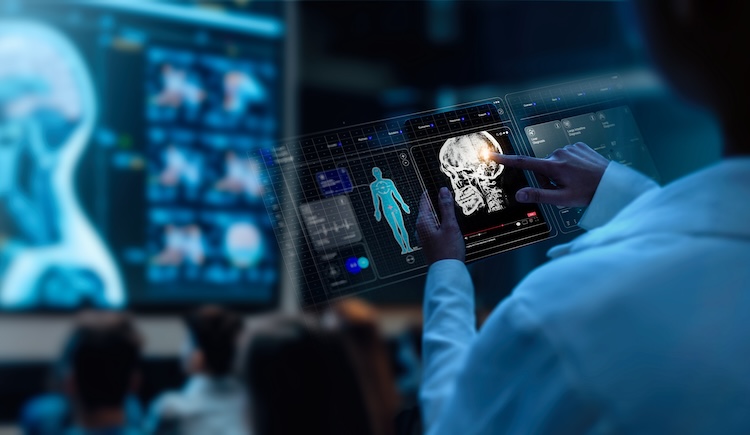
The integration of artificial intelligence (AI) into healthcare is revolutionizing the field, offering unprecedented opportunities for both patients and clinicians. From streamlining administrative processes to enhancing diagnostic accuracy, AI is poised to transform the delivery of medical services. As technology continues to advance, understanding how AI can be harnessed effectively becomes increasingly vital for healthcare professionals aiming to stay ahead in this rapidly evolving landscape.
The scope of AI applications spans across all facets of healthcare, from managing administrative tasks to delivering personalized clinical care. According to Dr. Samir Kendale, medical director of Anaesthesia Informatics at Beth Israel Lahey Health and an assistant professor at Harvard Medical School, the potential for AI to benefit every specialty is vast. He emphasizes that AI’s versatility allows it to enhance efficiency, reduce errors, and support better patient outcomes, making it an essential component of modern medicine. For a deeper understanding of how AI can be used to address complex medical challenges, explore innovative approaches in healthcare technology.
The Necessity for Clinicians to Embrace AI
Despite its promising potential, many healthcare providers are still unfamiliar with AI’s capabilities and applications. Dr. Kendale notes that formal education on AI was only recently incorporated into medical training, leaving many generations of physicians without foundational knowledge of this technology. As AI becomes more integral to healthcare, clinicians must proactively acquire the necessary skills to incorporate these tools into their practices.
Interesting:
Maha Farhat, MD, MSc, an associate physician of Pulmonary and Critical Care at Massachusetts General Hospital, along with Gil Omenn, PhD, and Kendale, advocates for clinicians to enhance their AI literacy. Farhat highlights that understanding how to leverage AI strategically can significantly benefit diagnostic processes and treatment planning. She adds that when clinicians are equipped with AI knowledge, they can employ these tools to explore new treatment avenues and reduce diagnostic uncertainties, ultimately leading to more personalized and effective patient care. To learn more about how AI can help improve medical scenarios, visit ways AI supports clinical decision-making.
Practical AI Use Cases in Healthcare
Several real-world examples demonstrate the tangible benefits AI offers to healthcare:
- Enhancing Patient-Clinician Interactions: AI can automate routine tasks, freeing clinicians to focus more on direct patient engagement. For instance, medical scribe technology can automatically transcribe visit notes and highlight key information, allowing providers to dedicate more time to patient conversations. AI algorithms can also assist in drafting communication with patients, summarizing medical histories, and recommending personalized treatment options. This reduction in administrative burden has the potential to mitigate burnout among clinicians while enriching the patient experience.
- Improving Diagnostic Accuracy: AI’s ability to interpret complex imaging results is transforming specialties like gastroenterology and radiology. For example, AI-powered image recognition can detect polyps during colonoscopies more effectively than traditional methods. Similarly, AI can analyze EKGs and CT scans to identify abnormalities promptly. While these tools do not replace specialists, they allow experts to prioritize cases that require detailed review, thereby optimizing their time and ensuring faster diagnosis for patients. AI can also generate a shortlist of the most probable diagnoses, facilitating quicker decision-making and treatment initiation.
- Advancing Quality and Safety Metrics: AI-driven data analysis enables healthcare organizations to identify high-risk patients proactively. For example, AI systems can analyze large datasets to flag patients at risk of developing sepsis, prompting timely interventions. AI can also monitor post-surgical patients for signs of opioid dependency or detect areas where medication errors are likely, leading to targeted safety improvements. Implementing such AI solutions supports the goal of delivering value-based, safer, and more efficient care.
- Providing Data-Driven Support for Clinicians: AI tools can serve as an extensive resource for complex cases. Clinicians can query AI chatbots to access diagnostic insights and evidence-based recommendations, significantly reducing research time. Additionally, AI can support personalized treatment plans by analyzing similar cases and predicting which approaches are most likely to succeed, thereby optimizing patient outcomes.
- Diagnosing Rare Diseases: The challenge of identifying rare conditions often stems from limited exposure and scarce case studies. AI can address this by sifting through vast datasets to find comparable cases, enabling faster diagnosis and revealing effective treatments previously difficult to discover. This capability is especially critical in rare disease management, where timely intervention can make a significant difference.
Strategies for Incorporating AI into Healthcare Practice
For clinicians interested in advancing their understanding of AI, Kendale recommends identifying the informatics teams within their health systems. These teams are typically well-positioned to guide the integration of AI tools into existing workflows and to provide training on their effective use. Moreover, engaging with professional organizations at local, state, and national levels can open pathways to further education and collaboration, helping clinicians stay informed about emerging AI applications and standards. Embracing these resources enables healthcare providers to harness AI’s full potential, leading to substantial improvements in patient care quality and operational efficiency.