






Mastering Root Cause Analysis in Healthcare for Safer Patient Outcomes
 December 24, 2025
Understanding how to effectively identify and address the underlying causes of adverse events is essential for advancing safety and quality in healthcare settings. Root Cause Analysis (RCA) serves as a vital tool in this pursuit, enabling healthcare professionals to uncover fundamental issues rather than just symptoms. Implementing a structured approach to RCA not only enhances patient safety but also supports organizational efficiency and compliance with regulatory standards. This comprehensive guide explores the methodologies, best practices, and challenges associated with RCA in healthcare, empowering organizations to foster a culture of continuous improvement.
What is Root Cause Analysis?
Root Cause Analysis is a systematic and disciplined process designed to determine the core reasons behind a problem, rather than merely treating its symptoms. This method involves an in-depth investigation aimed at understanding the fundamental factors that contribute to adverse events, such as patient falls, medication errors, or infections. By pinpointing these root causes, healthcare providers can develop targeted interventions that effectively prevent recurrence.
For instance, when a patient experiences a fall in a hospital, RCA helps identify contributing factors such as environmental hazards, staff communication lapses, or procedural failures. Once the root causes are identified, organizations can implement specific corrective measures—like environmental modifications or staff training—to mitigate the risk of future incidents. This proactive approach is crucial for fostering a safer healthcare environment.
Adopting an RCA-based methodology encourages healthcare organizations to proactively address potential systemic issues, leading to ongoing improvements in processes, safety protocols, and overall quality of care. It is an indispensable component in the pursuit of patient safety, aligning with best practices recommended by authoritative bodies such as the Agency for Healthcare Research and Quality.
Why is RCA Important in Healthcare?
Root Cause Analysis holds significant value across multiple dimensions of healthcare delivery:
-
Enhancing Patient Safety: By identifying the fundamental causes of adverse events, RCA enables healthcare teams to implement measures that reduce the likelihood of repeat incidents. For example, hospitals that have integrated RCA into their safety protocols have seen substantial reductions in patient injuries, like a 68% decrease in fall-related injuries reported in a notable study published in the Journal of Nursing Care Quality. Furthermore, employing RCA can lead to a reduction of medical errors by up to 90%, according to the Agency for Healthcare Research and Quality.
-
Cost Containment: Addressing root causes helps prevent costly adverse events, which can lead to legal liabilities, insurance claims, and increased medical expenses. By proactively mitigating these issues, healthcare organizations can conserve resources and improve financial performance.
-
Quality Improvement: RCA illuminates areas where healthcare processes and systems can be optimized. Understanding the underlying reasons for issues allows organizations to make systemic changes that enhance patient outcomes and overall care quality.
-
Regulatory Compliance: Many health authorities mandate root cause investigations following adverse events. Conducting thorough RCAs ensures compliance with regulations, maintains accreditation status, and avoids penalties. To learn more about integrated healthcare solutions, visit this resource.
RCA Methodologies in Healthcare
Several proven techniques are employed to conduct effective RCA in healthcare environments:
Fishbone Diagram
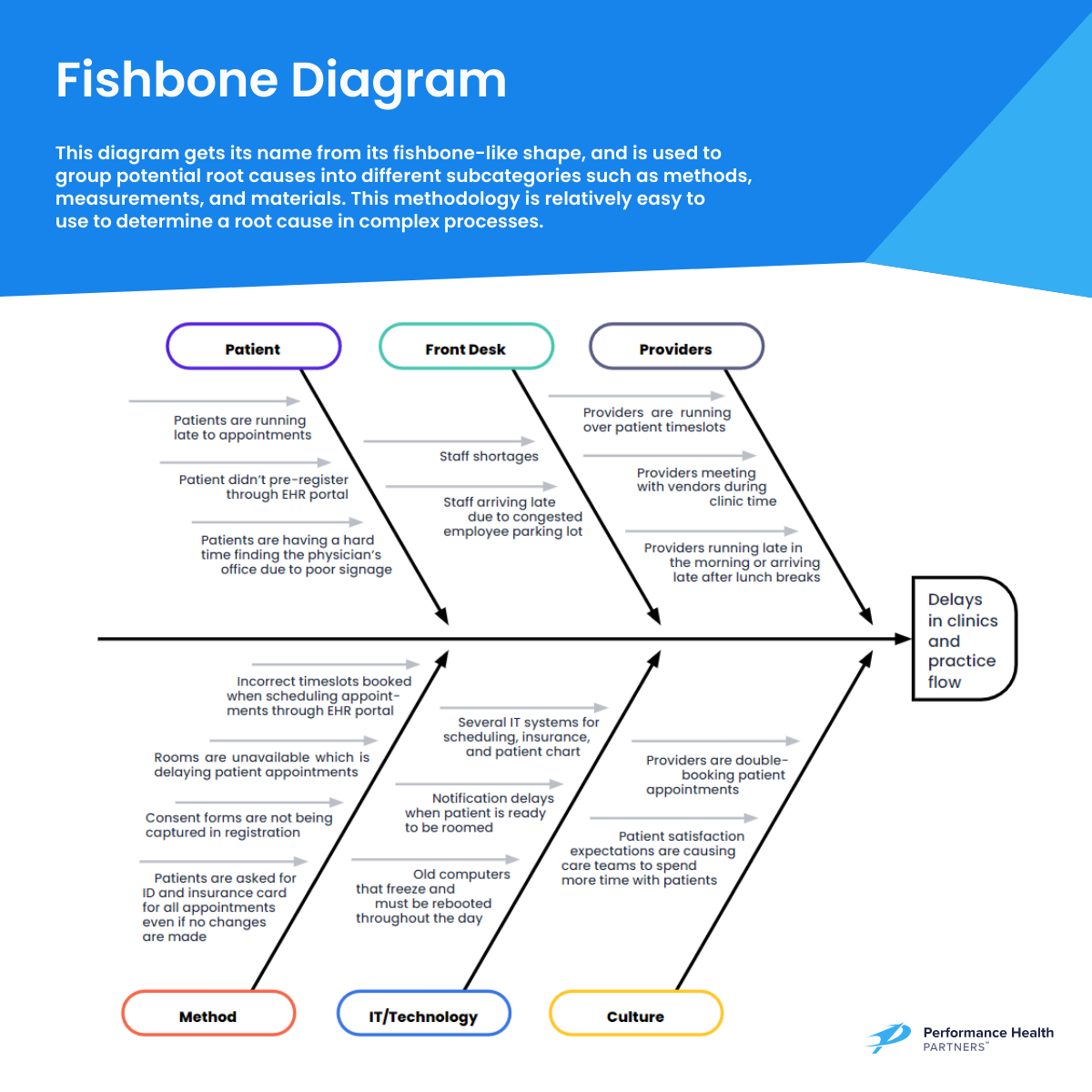
Also called the Ishikawa or Cause-and-Effect Diagram, this method involves brainstorming all potential causes of an adverse event, categorizing them into groups such as personnel, equipment, procedures, and environment. The diagram resembles a fishbone, with the main problem at the head and causes branching out along the spine. This visual tool helps teams identify relationships between factors and prioritize areas for intervention. An example is illustrated here.
The 5 Whys Technique
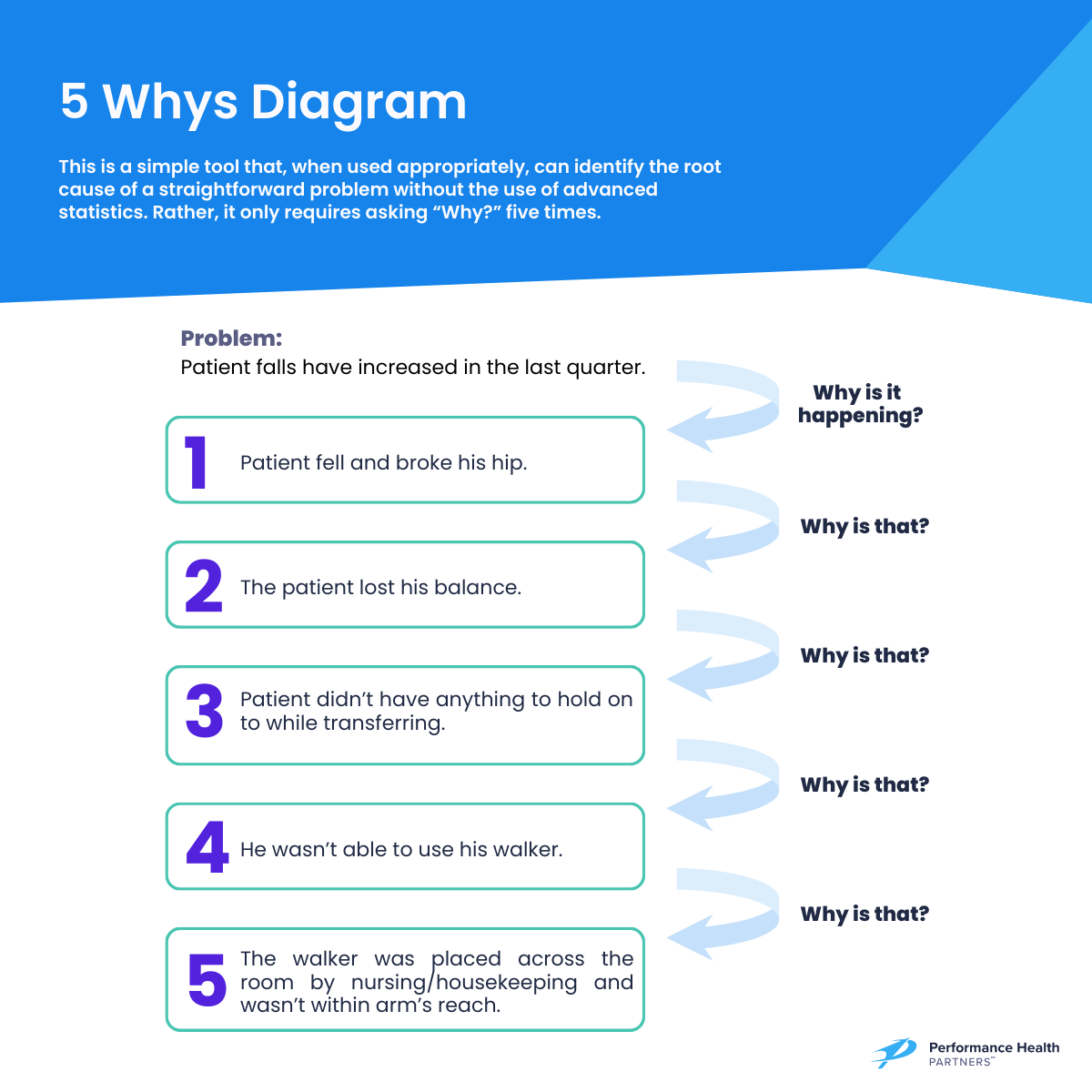
This approach involves asking “why” repeatedly—typically five times—to drill down into the root cause of a problem. Each answer prompts the next “why,” gradually uncovering deeper systemic issues. It is particularly useful for quick, focused investigations where causes are not immediately apparent. An example diagram can be viewed here.
Failure Modes and Effects Analysis (FMEA)
This systematic approach involves identifying potential process failures, evaluating their severity, and developing mitigation strategies before incidents occur. FMEA is especially valuable in high-risk areas such as medication management or surgical procedures, as it allows teams to prioritize risks and implement preventative controls proactively.
Barrier Analysis
This technique examines barriers or safeguards that failed or were absent, contributing to an adverse event. By identifying gaps in safety barriers, organizations can reinforce existing controls or introduce new ones, thereby reducing the chance of recurrence. This method emphasizes systemic issues rather than individual mistakes.
Critical Factors for Effective RCA in Healthcare
Executing RCA effectively requires careful planning and a collaborative approach. Healthcare leaders should consider the following strategies:
Interesting:
- Mastering swot analysis in healthcare for strategic success in 2025
- Advancing interoperability in healthcare for better patient outcomes
- Mastering strategic planning in healthcare for better outcomes
- Essential strategies for mastering communication in healthcare
- Mastering capital budgeting strategies in healthcare for sustainable growth
-
Team Involvement: RCA should be a multidisciplinary effort involving clinicians, administrators, support staff, and other stakeholders. Diverse perspectives ensure comprehensive analysis and more effective solutions.
-
Blame-Free Environment: The investigation must focus on system flaws, not individual faults. Cultivating a culture of safety encourages staff to report adverse events openly, facilitating honest and thorough RCA.
-
Timeliness: Conduct RCA promptly after an incident to preserve accurate information and reduce bias. Delays can lead to incomplete data and hinder root cause identification.
-
Standardized Processes and Training: Establish clear protocols for RCA and train staff regularly. Consistent methodology enhances reliability and facilitates benchmarking across incidents.
-
Policy and Culture Review: Incorporate an assessment of existing policies and organizational culture within the RCA. This helps uncover systemic issues and supports comprehensive improvement plans.
-
Actionable Corrective Plans: Develop specific, measurable, and time-bound actions addressing identified root causes. Assign responsibilities and monitor progress diligently to ensure effectiveness.
Integrating RCA findings into broader quality improvement initiatives amplifies their impact, allowing healthcare organizations to prioritize risks and optimize patient safety strategies. Continuous monitoring and evaluation of corrective actions are essential to sustain improvements over time.
Overcoming Challenges and Limitations of RCA in Healthcare
Despite its benefits, RCA faces several obstacles:
-
Resource and Time Demands: Conducting thorough RCAs requires significant personnel, expertise, and technological support. Limited resources can hinder comprehensive investigations.
-
Complex Systems: Healthcare environments are intricate, making it difficult to pinpoint all contributing factors, especially systemic or cultural issues.
-
Limited Generalizability: Root causes are often specific to individual incidents, making it challenging to extrapolate findings across different contexts.
-
Resistance to Change: Implementing recommended improvements may encounter resistance from staff or administration, delaying or diluting the impact of RCA.
To maximize RCA effectiveness, leadership must foster a culture that values safety and continuous learning. Supporting staff participation, providing ongoing training, and allocating resources—including advanced incident management tools—are crucial steps. For example, deploying an incident management system with integrated RCA modules can streamline investigations, ensure consistency, and facilitate documentation.
Leveraging Technology to Improve RCA Efficiency
Modern incident management platforms can significantly enhance the RCA process. These systems enable easy incident reporting, automated categorization, and guided analysis workflows aligned with organizational methodologies. Such tools provide centralized repositories for documentation, corrective action tracking, and performance monitoring. Utilizing advanced technology reduces manual effort, minimizes errors, and accelerates the investigation cycle, leading to better patient safety outcomes.
Looking Ahead: Embracing Continuous Improvement
Implementing effective root cause analysis is essential for advancing healthcare safety and quality. By fostering a culture of openness and learning, leveraging technological solutions, and maintaining a focus on systemic issues, healthcare organizations can overcome challenges and realize the full benefits of RCA. For organizations seeking to streamline their RCA processes, exploring dedicated incident management systems can be a game-changer. To see how such systems can support your safety initiatives, contact us for more information.