

Effective communication of patient movements within healthcare settings is essential for delivering seamless, coordinated care. ADT messages serve as vital tools that inform healthcare providers about key events such as patient admissions, transfers, and discharges. These notifications facilitate timely updates, improve care continuity, and help prevent unnecessary readmissions. As healthcare organizations increasingly adopt standardized messaging protocols, understanding the role of ADT feeds becomes crucial for maintaining an efficient healthcare ecosystem.
Healthcare providers generate ADT messages from various settings including hospitals, clinics, psychiatric facilities, nursing homes, primary care offices, home health agencies, and hospices. These alerts are generated whenever significant patient events occur, ensuring that all members of the care team are promptly informed and can coordinate accordingly.
Sources of ADT Messages
Hospitals
Health Clinics
Psychiatric Facilities
Skilled Nursing Facilities
Primary Care Providers
Home Health Agencies
Hospices
The Critical Role of ADT in Care Coordination
ADT notifications are fundamental in care management by alerting relevant providers about patient status changes. These messages are dispatched whenever a patient is admitted, transferred, or discharged from a healthcare facility. The primary purpose is to ensure that the entire care team, including primary care physicians and specialists, stays informed for effective follow-up and treatment planning. Such timely communication helps prevent unnecessary hospital readmissions and fills gaps in ongoing patient care.
The Health Level Seven (HL7) standards introduced the ADT — Admit, Discharge, and Transfer feeds — to formalize patient data notification services. These standards underpin interoperability across diverse healthcare systems, enabling seamless exchange of vital patient information.
Weekly Volume of ADT Messages at MiHIN
Weekly ADT Message Transmission by MiHIN
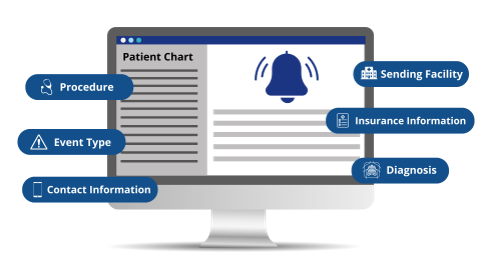
Key Data Contained in ADT Messages
Origin of the Notification
Details regarding the healthcare setting where the event was recorded, such as hospital or clinic.
Timestamp of the Event
Exact date and time when the encounter or event took place, recorded within the patient’s electronic health record.
Type of Event
Over 50 different HL7-defined ADT message types exist, including:
- ADT-A01: Patient Admission
- ADT-A02: Patient Transfer
- ADT-A03: Patient Discharge
- ADT-A04: Patient Registration
- ADT-A05: Patient Pre-administration
- ADT-A08: Patient Information Update
- ADT-A11: Cancel Patient Admission
- ADT-A12: Cancel Patient Transfer
- ADT-A13: Cancel Patient Discharge
A comprehensive list of message types can be viewed here.
Patient Identification
Basic demographic information such as name, date of birth, and medical record number.
Care Team Members
Details about healthcare professionals responsible for the patient’s care within the facility.
Interesting:
- How iot revolutionizes healthcare security and patient care
- Empowering primary care with remote patient monitoring strategies
- Mastering information governance in healthcare protecting data and enhancing care
- Effective strategies for measuring and enhancing patient satisfaction in healthcare
- Understanding healthcare revenue cycle management and its impact on patient care
Patient Status
Indication of whether the patient is alive or deceased; if deceased, the date and time of death are included.
Clinical Observations
Any clinical data or observations documented during the encounter, often included in the ORU component.
Diagnoses
Multiple diagnoses are communicated using the DG1 segment, which encodes various medical conditions relevant to the patient.
Insurance Information
The IN1 segment contains insurance policy details, which are essential for billing and coverage verification, ensuring proper financial processing.
Overview of this Use Case
MiHIN’s ADT Use Case leverages the Active Care Relationship Service to identify which healthcare providers are actively caring for a patient. This allows the system to locate those with an existing relationship in the health directory and route ADT notifications accordingly. This approach ensures that the right care team members receive timely updates, facilitating coordinated and efficient patient management.
Despite the complexity of ADT messaging, MiHIN aims to serve as a central hub that ensures accurate, timely delivery of critical information to the appropriate recipients at the point of care. This system enhances communication, supports better clinical decisions, and ultimately improves patient outcomes.
For professionals interested in advancing their healthcare analytics expertise, understanding the intricacies of data exchange is vital. You can explore resources on how to become a healthcare data analyst to develop skills necessary for managing healthcare data effectively.
Additionally, the integration of artificial intelligence in healthcare systems is transforming patient care. Learn more about how AI helps healthcare to see how intelligent technologies improve diagnostics and operational efficiency.
Understanding the types of data involved in healthcare is also essential. Investigate what is demographic data in healthcare to appreciate how patient information supports personalized medicine and targeted interventions.
Finally, grasping the broader scope of data utilization in healthcare can be achieved through exploring how is data used in healthcare, which highlights the importance of data-driven decision-making in modern medicine.