



Healthcare audits are foundational tools that promote regulatory adherence, safeguard against risks, and elevate the quality of patient care. In an era where data security, accurate billing, and clinical excellence are paramount, understanding the nuances of healthcare auditing becomes essential for professionals and organizations alike. This guide provides a detailed overview of the different types of healthcare audits, the processes involved, key focus areas, and best practices for leveraging audit findings to improve operational and clinical outcomes.
Introduction to Healthcare Audits
What Is a Healthcare Audit?
A healthcare audit involves a meticulous review of a healthcare organization’s policies, procedures, and patient records to verify compliance with regulatory standards and identify areas for operational improvement. These audits serve multiple purposes, including detecting billing inaccuracies, preventing fraud, and ensuring that clinical practices align with established guidelines. For instance, audits evaluate whether billing codes match the services provided, helping organizations avoid costly penalties. They also facilitate the early detection of compliance issues, which can significantly influence a facility’s reputation and financial health.
The Significance of Healthcare Audits
Implementing comprehensive healthcare audits is vital for maintaining regulatory compliance, managing risks, and optimizing clinical outcomes. They ensure organizations adhere to laws such as HIPAA, Medicare, and Medicaid, reducing the likelihood of costly penalties. Additionally, regular audits help identify vulnerabilities within healthcare systems, enabling proactive risk mitigation. They also support continuous quality improvement by highlighting areas where processes can be refined to enhance patient safety and care standards.
[auditboard_banner]
Types of Healthcare Audits
Internal Audits
These are conducted by an organization’s internal team to continuously monitor compliance, assess risk management strategies, and evaluate operational efficiencies. Internal audits help healthcare providers proactively identify inefficiencies, strengthen internal controls, and ensure adherence to industry standards. They often serve as a preparatory step before external audits, enabling organizations to address issues early and avoid penalties.
External Audits
Performed by third-party entities such as insurance providers, government agencies, or accreditation bodies, external audits validate compliance with legal and contractual requirements. They verify whether healthcare entities are billing accurately, following regulatory mandates, and maintaining proper documentation. Failing an external review can result in sanctions, reimbursement denials, or damage to reputation, making external audits a critical aspect of ongoing compliance efforts.
Compliance Audits
Focusing specifically on adherence to regulatory frameworks such as OIG, HIPAA, and cybersecurity standards, compliance audits assess whether healthcare practices follow industry laws. These evaluations include reviews of patient privacy protections, billing accuracy, and internal controls. A robust compliance program, supported by regular audits, can prevent legal issues and enhance organizational credibility.
Regulatory Frameworks Guiding Healthcare Audits
Cybersecurity and Data Protection
As healthcare moves increasingly into digital domains, cybersecurity has become a central component of audit processes. Ensuring the security of electronic health records (EHRs) and sensitive patient data is vital to prevent breaches and comply with standards like HIPAA security rules. Audits now incorporate cyber risk assessments to evaluate vulnerabilities in data storage, cloud services, and third-party access, emphasizing the importance of robust internal controls to safeguard digital assets. Non-compliance can lead to severe penalties and compromised patient trust, underscoring the importance of regular cybersecurity audits. For additional insights, organizations can explore revolutionizing healthcare through data analytics.
Regulatory Standards and Best Practices
Healthcare audits must align with various regulatory standards, such as:
- Medicare and Medicaid reimbursement rules, which stipulate proper billing procedures.
- HIPAA privacy and security standards, safeguarding patient information.
- OIG guidelines, providing frameworks for detecting fraud and abuse.
- Cybersecurity frameworks like HITRUST CSF and GDPR, which further define best practices for data protection.
Failure to comply with these standards can lead to fines, loss of licensure, and reputational damage. Regular audits help organizations stay current with evolving regulations and implement necessary adjustments.
Impact of Non-Compliance
Neglecting compliance can result in significant financial penalties and operational disruptions. Penalties from government agencies and insurers may include hefty fines, suspension of reimbursements, or loss of accreditation. Moreover, non-compliance may lead to legal liabilities, damage to brand reputation, and compromised patient safety. For example, inaccurate documentation or billing errors can trigger audits that reveal systemic issues, prompting corrective actions to prevent future violations.
The Healthcare Audit Process
Key Steps in Conducting an Audit
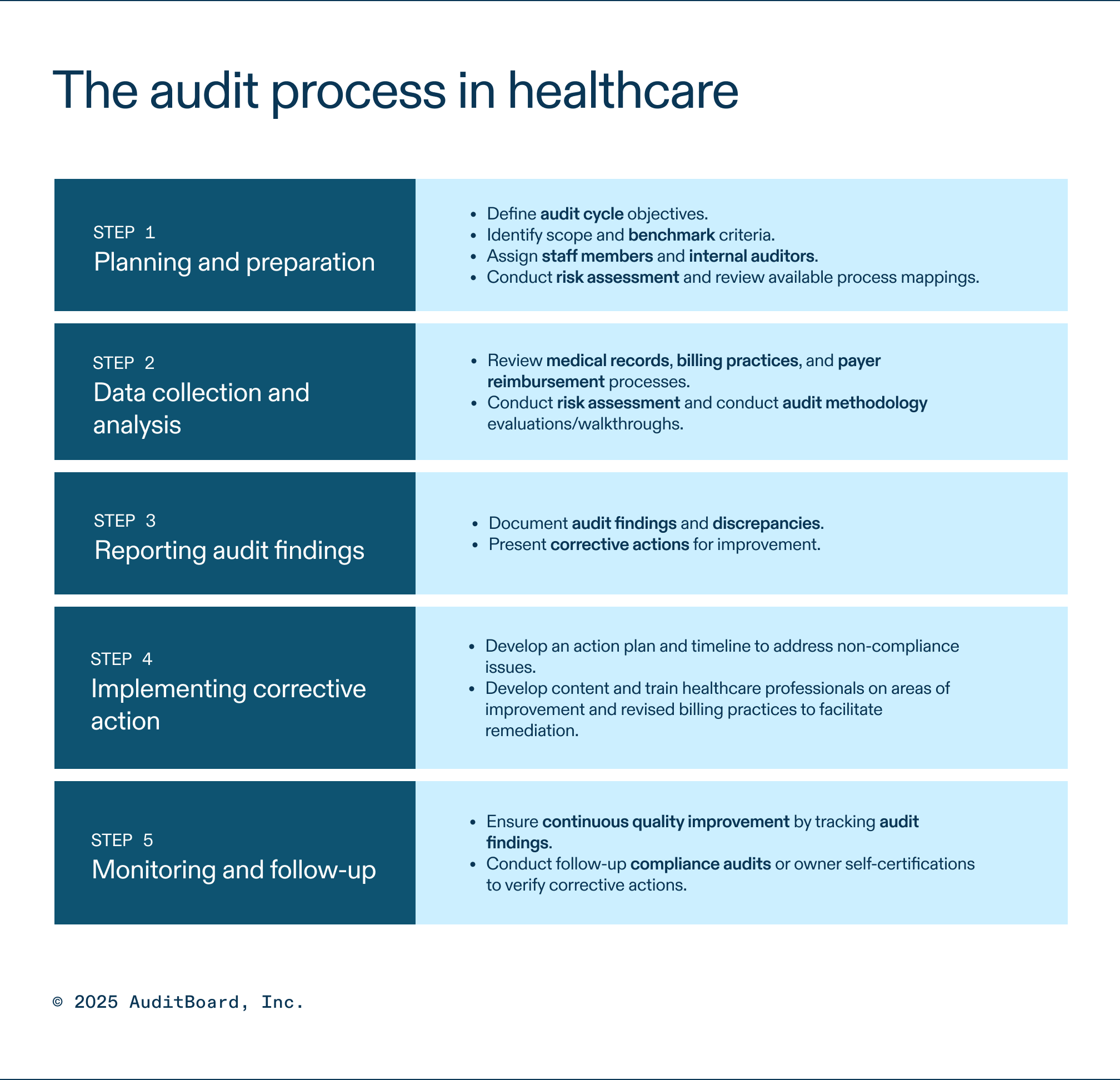
Step 1: Planning and Preparation
- Establish clear objectives and define the scope.
- Select appropriate benchmarks and criteria.
- Assign qualified staff and internal auditors.
- Conduct risk assessments to identify vulnerable areas.
Step 2: Data Collection and Analysis
- Review medical and billing records meticulously.
- Evaluate payer reimbursement processes.
- Conduct walkthroughs and risk assessments to understand workflows.
Step 3: Reporting Findings
- Document discrepancies, non-compliance issues, and areas for improvement.
- Prepare comprehensive reports highlighting key findings.
- Present recommendations for corrective actions to leadership.
Step 4: Implementing Corrective Measures
- Develop targeted action plans with clear timelines.
- Update policies and procedures as needed.
- Educate healthcare staff on new compliance practices and billing protocols to facilitate remediation.
Step 5: Monitoring and Follow-Up
- Track the implementation of corrective actions.
- Conduct follow-up audits or self-certifications to verify improvements.
- Use continuous monitoring to foster ongoing quality enhancement.

Interesting:
- Enhancing healthcare data integrity a comprehensive review of quality dimensions assessment techniques and evaluation tools
- Enhancing healthcare quality through the qio program
- Understanding healthcare compliance ensuring quality and integrity in medical practices
- Elevating healthcare quality through accreditation a critical step for trust and excellence
- Enhancing healthcare quality through a structured qapi framework
Core Focus Areas in Healthcare Audits
Billing and Reimbursement Accuracy
Ensuring claims are correctly coded and submitted according to payer policies prevents revenue loss and legal issues. Audits evaluate whether billing practices comply with guidelines from Medicare, Medicaid, and private insurers, reducing the risk of claim denials and penalties.
Clinical and Medical Necessity Evaluation
Assessing whether treatments and procedures are justified based on clinical documentation ensures quality of care and regulatory compliance. Audits in this area help identify overutilization or underutilization, promoting evidence-based practices that improve patient outcomes.
Patient Record Integrity
Accurate and complete health records are critical for continuity of care, legal protection, and compliance with HIPAA. Audits verify the accuracy of documentation, diagnoses, and storage practices, which are vital for both clinical and billing purposes.
Revenue Cycle Optimization
Streamlining claims processing, reducing delays, and minimizing reimbursement errors are essential for financial stability. Audits pinpoint inefficiencies in the revenue cycle, enabling targeted improvements that enhance cash flow.
Risk Management and Internal Control Effectiveness
Identifying vulnerabilities and preventing fraudulent activities safeguard organizational assets. Audits assess internal controls and compliance with policies, ensuring operational integrity and legal adherence.
Tools and Techniques in Healthcare Auditing
Modern healthcare audits leverage advanced tools such as:
- Electronic Health Records (EHR) systems for efficient data review and analysis.
- Audit tracking software that monitors findings, tracks corrective actions, and automates compliance checks.
- Regulatory compliance platforms like AuditBoard streamline risk assessments and adherence processes.
Utilizing these technologies enhances audit accuracy, efficiency, and compliance management, ultimately supporting better clinical and financial outcomes.
Addressing and Acting on Audit Findings
Effective management of audit results is crucial to sustained improvement:
- Thorough Documentation: Create detailed reports outlining issues and recommended actions.
- Action Plan Development: Prioritize corrective measures, assign responsibilities, and set deadlines.
- Staff Training: Educate healthcare professionals on updated procedures, compliance standards, and documentation practices.
- Continuous Monitoring: Regular follow-up audits and real-time tracking help ensure persistent compliance and quality enhancement.
Advantages and Obstacles in Healthcare Auditing
Benefits
- Enhances patient safety and clinical outcomes.
- Ensures adherence to legal and regulatory standards.
- Reduces financial and legal risks.
- Promotes operational efficiencies and revenue integrity.
Challenges
- Resistance from staff unfamiliar with new audit protocols.
- Complexity of healthcare regulations that demand ongoing education.
- High costs associated with implementing sophisticated audit tools.
- Resource allocation for training, technology, and compliance management.
Future Directions for Healthcare Organizations
Adopting integrated audit tools and embracing continuous improvement strategies are vital for future success. Leveraging platforms like AuditBoard can help streamline audit cycles, improve compliance, and foster a culture of quality. Staying abreast of regulatory changes and technological advancements will further empower organizations to maintain excellence.
Next Steps
Healthcare entities should prioritize establishing robust audit processes, integrating innovative tools, and fostering staff education to ensure ongoing compliance and quality care. Regularly updating policies and conducting periodic reviews will help sustain improvements and adapt to evolving standards.
You may also like to explore



Master your audit playbook: essential steps for internal audit teams

Top security audit software — cut fatigue & streamline workflows
Top headlines that defined 2025 for internal auditors