






Cultivating a Culture of Excellence in Healthcare: A Roadmap for Nursing Leadership
 December 23, 2025
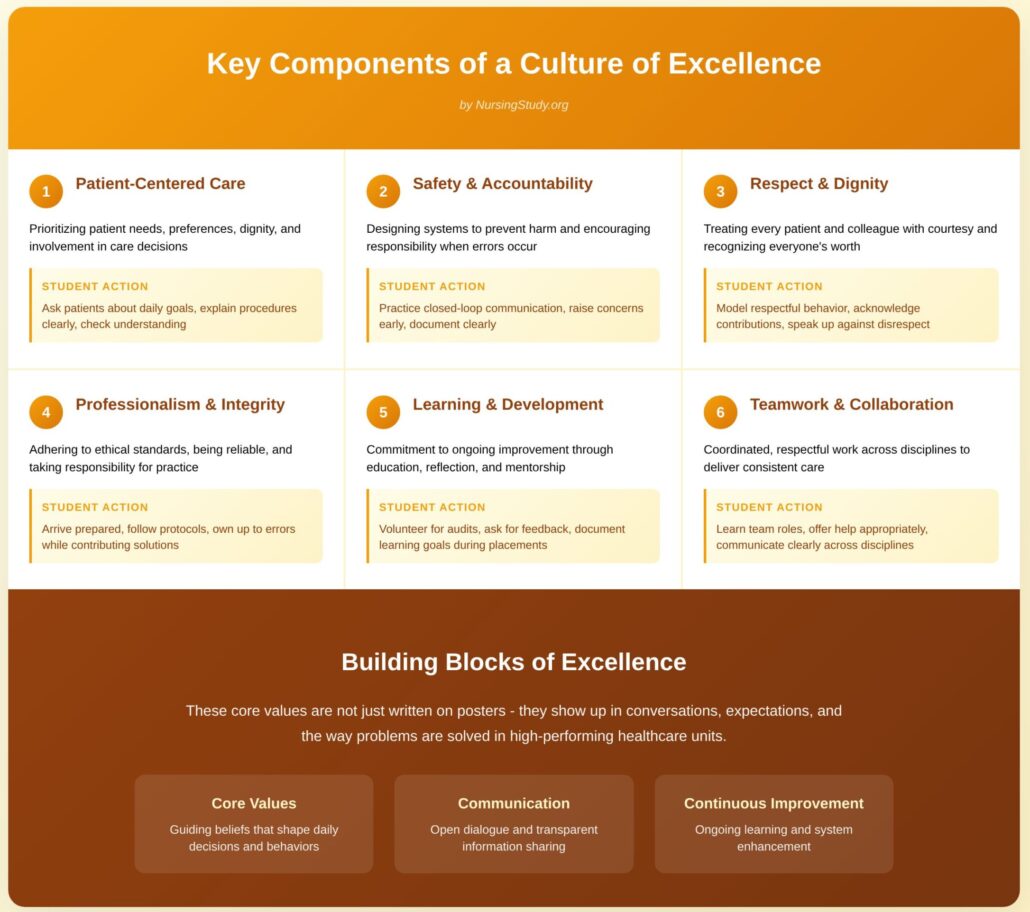
A thriving healthcare environment hinges on a shared commitment to excellence—an ongoing pursuit of high standards that benefits patients, staff, and organizations alike. For nursing students preparing to enter this dynamic field, understanding how to foster and lead a culture of excellence is essential. This guide explores the core principles, leadership qualities, communication strategies, and practical approaches necessary to embed excellence into everyday practice, ultimately elevating the quality and safety of patient care.
From organizational values to team collaboration and continuous improvement, cultivating a culture of excellence requires deliberate effort and active participation. By examining real-world models, case studies, and proven strategies, nursing students gain insights into how organizations succeed in delivering outstanding care. Embracing these lessons equips future professionals to become catalysts of positive change, ensuring that high standards are not just ideals but realities in every clinical encounter.
Defining the Essence of a Culture of Excellence in Healthcare
A culture of excellence in healthcare extends beyond mission statements or slogans; it embodies the organizational mindset that influences decision-making, behaviors, and interactions at every level. This culture reflects a collective belief that all patients deserve the best possible care and that continuous growth, safety, and compassion are fundamental to healthcare delivery.
Building such a culture requires intentional leadership that models exemplary behaviors and establishes systems supporting accountability. Every team member, from executive leaders to bedside nurses, contributes to creating an environment that values learning, respect, and safety. Characteristics include a unified vision, patient-centered focus, ongoing improvement initiatives, professional development opportunities, and open, honest communication—elements that underpin organizational success.
For example, a nursing unit that implements structured bedside shift reports promotes transparency, teamwork, and patient engagement, exemplifying how organizational practices shape a culture of excellence.
The Significance of a Culture of Excellence for Nursing
For nursing students, immersing in a high-performing organizational culture profoundly impacts their professional development. A culture emphasizing excellence nurtures a strong sense of identity, ethical practice, and commitment to high standards. It creates a supportive environment where teamwork reduces stress and burnout, and leadership opportunities arise through involvement in quality improvement projects.
Engaging in such environments helps students learn to align their practices with organizational goals, adopt evidence-based protocols, and develop confidence in their clinical judgment. This foundation prepares them to deliver safe, compassionate care and to assume leadership roles that sustain organizational excellence.
When organizations prioritize quality and safety, patient outcomes improve significantly. For example, implementing consistent safety protocols and fostering open communication can reduce adverse events and enhance patient satisfaction—outcomes that are directly linked to organizational culture.
Impact of a Culture of Excellence on Patient Outcomes
The direct relationship between organizational culture and patient safety is well established. Organizations that embed excellence into their core values tend to experience fewer errors, better adherence to best practices, and higher patient satisfaction scores. When staff are encouraged to communicate openly, report near misses, and engage in continuous learning, safety improves and complications decrease.
For instance, a surgical unit that adopts daily safety huddles promotes proactive risk management. As a result, infection rates decline, and patient trust increases. This demonstrates how a culture committed to excellence translates into tangible benefits—fewer complications, improved recovery, and more positive healthcare experiences.
Fundamental Elements of a Culture of Excellence
Constructing a lasting culture of excellence involves integrating key components that reinforce organizational values. These include core values, effective communication, and relentless pursuit of improvement—areas where nursing students can actively contribute.
Core Values That Drive Healthcare Excellence
Core values serve as the compass guiding daily decisions and behaviors. In high-performing units, these values are embedded in practice:
- Patient-centered care: Respecting patient preferences and promoting dignity.
- Safety and accountability: Designing systems that prevent harm and encourage reporting errors.
- Respect and dignity: Valuing every individual’s contribution and fostering an inclusive environment.
- Professionalism and integrity: Upholding ethical standards and reliability.
- Learning and development: Committing to ongoing education and mentorship.
- Teamwork and collaboration: Working cohesively across disciplines.
For example, a unit that emphasizes respect and learning might encourage a student to report a near miss, fostering accountability and system improvement without fear of blame.
Communication as the Backbone of Excellence
Clear, respectful communication underpins a culture of safety and trust. Practices such as structured handoffs, safety briefings, and open feedback channels minimize errors and promote teamwork.
- Structured handoffs: Using standardized formats reduces omissions.
- Safety huddles: Short, routine meetings identify risks early.
- Closed-loop communication: Ensuring instructions are understood and followed.
- Patient and family engagement: Involving them in care decisions builds trust.
For instance, employing the SBAR (Situation, Background, Assessment, Recommendation) framework during reporting ensures clarity and reduces misunderstandings, which is vital for patient safety.
Continuous Improvement as a Core Principle
Nursing professionals must embrace ongoing efforts to refine care processes. This involves identifying problems, measuring baseline performance, testing small changes, and analyzing outcomes—approaches often summarized by the Plan-Do-Study-Act cycle.
For example, a nurse-led project to improve discharge education might track documentation rates before and after implementing a new checklist, leading to increased patient understanding and reduced readmissions.
Developing Leadership Skills in Nursing
Leadership is crucial for embedding and sustaining a culture of excellence. Even without formal titles, nursing students can demonstrate leadership qualities that inspire trust and promote high standards.
Essential Leadership Traits for a Culture of Excellence
- Vision and purpose: Articulating clear goals aligned with patient care.
- Accountability: Owning successes and mistakes alike.
- Integrity: Acting ethically and reliably.
- Adaptability: Responding flexibly to changing circumstances.
- Collaboration: Valuing diverse perspectives and fostering teamwork.
- Effective communication: Ensuring information flows accurately and respectfully.
For example, a student who notices a safety concern and advocates for a change exemplifies proactive leadership.
Building Leadership Competencies
Students can cultivate leadership by engaging in clinical opportunities, seeking mentorship, practicing self-reflection, and embracing small roles that influence team dynamics. Developing emotional intelligence—recognizing and managing one’s own emotions while understanding others’—further enhances leadership capacity and resilience under stress.
Strategies to Promote a Culture of Excellence
Fostering an organizational environment where excellence thrives involves collective efforts:
Interesting:
- Cultivating a respectful culture the foundation of effective healthcare
- Essential steps for launching a healthcare venture in 2025
- Understanding roi in healthcare a complete guide for clinicians
- Navigating the benefits and challenges of ai in healthcare a comprehensive review
- Transforming healthcare the power of modern technologies for a healthier tomorrow
- Advocating for patient-centered care: Respecting patient preferences and promoting active participation.
- Supporting teamwork: Using structured communication tools and respecting interdisciplinary expertise.
- Utilizing feedback: Encouraging open, constructive feedback to identify strengths and areas for improvement.
- Addressing challenges: Recognizing barriers like resource limitations, resistance to change, and burnout, then developing strategies to overcome them.
For example, a student can respectfully question outdated practices, suggest evidence-based alternatives, and participate in quality improvement initiatives like safety audits or policy reviews.
Overcoming Barriers to Excellence
Healthcare environments face obstacles such as limited resources, hierarchical cultures, high staff turnover, and resistance to change. Recognizing these challenges enables nursing students to develop adaptive strategies:
- Lead by example, demonstrating openness to new practices.
- Engage colleagues in discussions about evidence-based improvements.
- Practice humility and patience, understanding that change takes time.
- Promote self-care to combat burnout, maintaining resilience and engagement.
For instance, a student who advocates for safety protocols during staff meetings helps to shift attitudes and reinforce a shared commitment to quality.
The Role of Emotional Intelligence in Nursing Leadership
Emotional intelligence (EI) influences how leaders navigate complex situations, build trust, and foster team cohesion. Key dimensions—self-awareness, self-regulation, motivation, empathy, and social skills—are vital for effective leadership.
- Recognizing personal stress triggers helps maintain composure.
- Demonstrating empathy builds rapport with patients and colleagues.
- Communicating openly and respectfully enhances teamwork.
- Addressing conflicts constructively promotes a positive work environment.
A student showing EI by supporting a peer during a stressful shift exemplifies leadership that influences organizational culture positively.
Implementing a Culture of Excellence in Practice
Nursing students can serve as advocates and catalysts for excellence through:
- Prioritizing patient-centered care by actively involving patients and families.
- Promoting safety by speaking up about concerns or lapses.
- Engaging in quality improvement projects aligned with organizational goals.
- Encouraging effective teamwork through respectful communication and shared responsibilities.
- Embracing feedback as a growth opportunity.
Even small acts—such as double-checking medication calculations or participating in team huddles—contribute to larger organizational goals.
Challenges and Solutions in Building Excellence
Common barriers include resource constraints, resistance to change, hierarchical cultures, and burnout. Overcoming these requires persistence, respectful inquiry, evidence-based advocacy, and self-care techniques.
- Lead by example, demonstrating adaptability.
- Use data and evidence to support change initiatives.
- Practice patience and humility, understanding that organizational change is gradual.
- Address burnout by promoting wellness, peer support, and work-life balance.
For example, a student who volunteers to assist with safety audits demonstrates proactive engagement in improving organizational culture.
Conclusion
Creating a culture of excellence in healthcare is a collective endeavor driven by intentional leadership, collaborative teamwork, and a relentless pursuit of quality. For nursing students, embracing these principles early lays the foundation for a career dedicated to safety, compassion, and continuous growth. By understanding and applying organizational values, honing leadership skills, and advocating for high standards, future nurses become vital agents of positive change.
The journey toward excellence involves ongoing learning, resilience in the face of challenges, and a commitment to serving with integrity. Every action—no matter how small—contributes to a healthcare system that prioritizes safety, respects patients, and fosters a culture where excellence is the norm.
As you prepare to step into your professional role, remember that leadership is about influence, and every nurse has the power to shape the future of healthcare through dedication, empathy, and a steadfast commitment to quality.
Frequently Asked Questions
What defines a culture of excellence in healthcare?
It is an organizational environment where high standards, continuous improvement, accountability, teamwork, and patient safety are prioritized consistently across all levels.
What are key traits that support a culture of high standards?
Core characteristics include patient-centeredness, effective communication, collaborative teamwork, leadership commitment, and ongoing learning.
Can you give an example of healthcare excellence?
A Magnet-recognized hospital that invests heavily in professional development, evidence-based practice, and staff engagement often reports superior patient outcomes and staff satisfaction.
What is the theoretical basis for a culture of excellence?
It involves understanding how shared values, leadership behaviors, and organizational systems interact to cultivate an environment where high-quality care is the standard.