


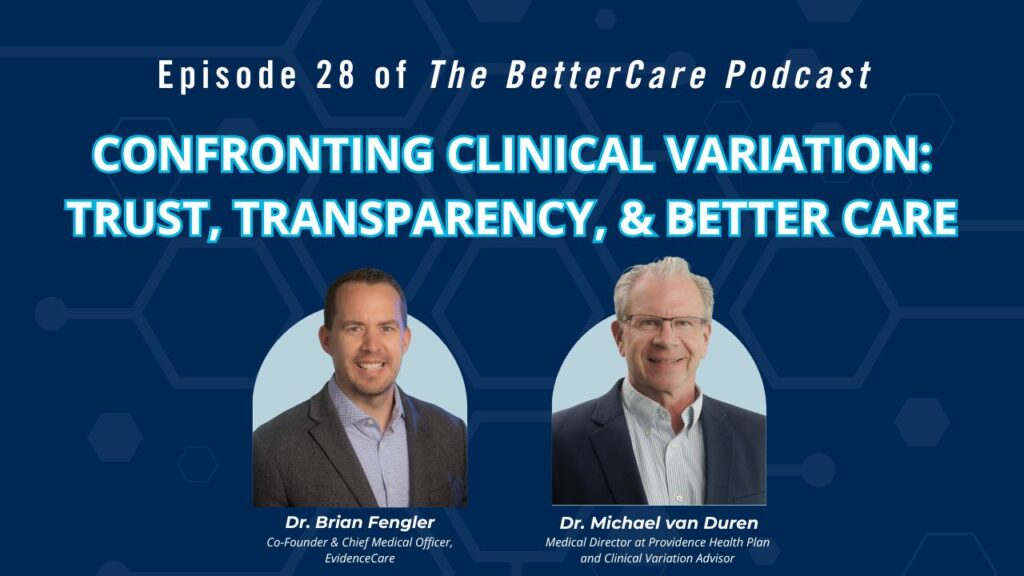
Clinical variation remains one of the most overlooked yet impactful factors contributing to inefficiency and rising costs within healthcare systems. Every unnecessary test, avoidable hospital admission, or prolonged patient stay often stems from differences in clinical practice—variations that can be unintentional, unavoidable at times, but frequently modifiable. For health organizations committed to elevating quality while managing expenses, understanding and actively reducing these variations is more than a data-driven task; it requires a cultural transformation that fosters continuous improvement and accountability.
Many conversations with clinical leaders highlight the complexity of tackling variation. In a recent episode of The BetterCare Podcast, I had the opportunity to explore this topic in depth with Dr. Michael van Duren, an expert with decades of experience leading variation reduction initiatives. Michael’s insights shed light on what it truly takes to achieve meaningful progress, emphasizing that successful change hinges on trust, engagement, and strategic measurement. This article summarizes key lessons from that discussion, offering practical guidance for health system leaders eager to address unwarranted clinical differences effectively.
Some quotes have been lightly edited for clarity and brevity.
What is care variation and why does it matter?
Care variation describes differences in how healthcare providers diagnose, treat, and manage similar patient conditions. While some variation is justified—accounting for individual patient needs—unwarranted variation often indicates inefficiencies, outdated practices, or inconsistent application of evidence-based guidelines. Such disparities can lead to unnecessary testing, overtreatment, avoidable hospitalizations, and extended stays, all of which escalate costs and pose risks to patient safety. Addressing these disparities is crucial not only for improving clinical outcomes and patient experience but also for controlling healthcare expenditures and optimizing resource utilization in a landscape increasingly driven by value.
Why health systems frequently struggle with reducing clinical variation
When I asked Michael why many initiatives aimed at reducing variation struggle to produce lasting results, he pointed out that it’s inherently uncomfortable. Bringing variation into focus means scrutinizing physician behaviors—something deeply personal and often sensitive. Change also demands significant effort; attribution of practices can be complex, and fostering a culture open to reflection takes finesse. Moreover, many organizations prioritize more immediate or visible projects, leaving variation reduction efforts as secondary or pilot programs that rarely lead to sustained change.
Trust is the foundation of successful variation reduction
Michael stressed repeatedly: You can’t effect change through data alone. Trust is essential. While health systems often rely on broad outcome metrics like average length of stay (LOS) or cost per diagnosis-related group (DRG), these figures can feel disconnected or even accusatory to clinicians. Instead, focusing on process metrics—specific behaviors within a clinician’s control, such as ordering patterns or discharge timings—tends to foster greater engagement.
He emphasized the importance of accurate attribution: “If a report shows I ordered more scans but it was actually a consulting specialist, I’ll dismiss it. Proper attribution is critical to meaningful engagement.” When his team visualized care episodes—comparing imaging choices or antibiotic use—clinicians responded quickly and openly, often initiating conversations about practice patterns.
The human element—curiosity, competitiveness, and resistance to change—plays a significant role. Exposing variation doesn’t just surface data; it challenges professional identity. Therefore, how data is presented is just as vital as what is shared. Michael advocates for unblinded peer data with names attached, presented thoughtfully and with a focus on learning rather than punitive measures.
“Doctors are competitive. When they see they’re an outlier, it stings. But then they want to understand why and how to improve,” he notes. Creating a safe space, often facilitated by trusted peer leaders or neutral third parties, encourages honest dialogue and shared learning. As Michael quips, “The best phrase I learned was to shut my big mouth—let the group talk.”
Making variation reduction worthwhile and sustainable
Reducing unwarranted practice differences isn’t just about quality; it’s also about demonstrating return on investment. To do this effectively, health systems need robust infrastructure—teams of data analysts and clinicians working together to develop meaningful, actionable metrics. These metrics should translate high-level outcomes into specific, trackable process behaviors that clinicians can influence.
Outcome metrics like cost per DRG or LOS are valuable for financial oversight but often lack clarity for clinical teams. Therefore, the key is to convert these into discrete process metrics, such as the frequency of ordering specific tests or the timing of discharge prescriptions, which can be directly attributed to individual providers. Tracking these behaviors over time helps demonstrate progress and justify ongoing investment in variation reduction efforts.
Interesting:
Building this infrastructure requires dedicated resources—analysts, data scientists, and a continuous measurement framework. Leaders must also show tangible results, such as improved clinical outcomes or cost savings, adjusted for external factors like seasonal trends. When properly implemented, these efforts foster a culture of shared ownership, where clinical teams feel empowered and responsible for ongoing improvement.
Cultivating a culture of collective responsibility and continuous enhancement
At the heart of successful variation reduction is leadership that promotes cultural change. Developing effective, practical metrics involves collaboration with clinicians to ensure relevance and usability. This iterative process keeps data meaningful and actionable. Senior clinical leaders should champion the effort by setting a tone of inquiry, not enforcement, encouraging open dialogue and empathy.
Physician leaders play a vital role in facilitating discussions, recognizing the stress and complexity inherent in clinical work. Frontline clinicians, supported by a culture of continuous improvement, can then engage thoughtfully and consistently—transforming variation work from a one-time project into an ongoing habit.
When this cultural shift occurs, a powerful reconnection happens: clinicians rediscover their purpose and commitment to best practices. Feedback from participants often highlights that these conversations are among the most valuable aspects of quality improvement initiatives.
Are you seeking reliable data to support your clinicians in reducing unwarranted practice variation?
If your organization is ready to advance its efforts, EvidenceCare offers two innovative tools designed to help health systems diminish unnecessary care, reduce costs, and foster clinician engagement:
CareInsights: This mobile-first analytics platform delivers personalized, actionable insights directly to clinicians—via text message, no login required. It emphasizes process metrics within their control, such as imaging utilization or lab ordering, and compares their practices to peers in similar settings. Delivered weekly and tailored by clinical leaders, CareInsights transforms complex data into a simple feedback loop that promotes meaningful change. For more information, see how is Canada’s healthcare system structured to support such innovations.
CareGauge: An integrated decision support tool embedded within the electronic health record (EHR), providing real-time visibility into utilization and cost metrics. Clinicians can view data on lab, imaging, medication use, and length of stay without disrupting workflow. This transparency has been shown to decrease unnecessary testing, shorten hospital stays, and save significant costs per patient discharge—an essential step toward sustainable variation management. To learn about digital solutions in healthcare, explore what is a app in healthcare.
Both tools are designed with clinicians in mind—credible, intuitive, and focused on actionable insights. Whether your goal is to motivate physician-driven improvement or support frontline decisions, EvidenceCare provides the infrastructure to make sustainable change a reality.
Schedule a demo today to discover how CareInsights and CareGauge can enhance your variation reduction initiatives.
To listen to the full episode, explore Episode 28 of The BetterCare Podcast.